Evidence · Systems · Accountability

AI Governance Across Organizations and Society

Independent research that connects institutional claims, technical systems, human authority, governing rules, and measurable outcomes.

Evidence before conclusions. Facts before assumptions. Governance before scale.

What is the real boundary of an AI system? It is not only the model or the sandbox. It includes every founder, employee, former employee, supplier, credential, session, tool, external platform, decision, and dependency capable of carrying knowledge or authority across the system.

A formal boundary does not prove effective separation. Reconstructable evidence must show what crossed, what remained, who was authorized, who could intervene, and how the organization verified the outcome.

See the complete protected-access package →
Featured leadership and disclosure record · September 2026

When a frontier leader asks the industry for candor, what must the leader disclose first?

CBS News interviewed Anthropic CEO Dario Amodei about accelerating AI capability, risk disclosure, model testing, independent evaluators, and public oversight. The interview is presented as attributed public evidence. The research question applies his proposed standard first to the organization he leads.

Higher-standard questions · Leadership by example

The standard must operate inward before it is demanded outward

  • Does Amodei’s criticism of “the industry” include Anthropic, and what evidence defines the scope?
  • When did Anthropic identify each material capability and risk, and what did it disclose at that time?
  • What precisely came from public research, lawful employee expertise, authorized access, OpenAI-era institutional work, or independent post-formation development?
  • Can a qualified independent reviewer reconstruct Claude’s technical and safety lineage from authenticated records?
  • Who selects, pays, limits, and can remove Anthropic’s evaluators—and what findings must they disclose?
  • What evidence shows that Anthropic applies to itself the transparency, testing, and governance standards it asks others to follow?

Lead by example: a frontier organization asking an industry for disclosure should make its own development record capable of standing under the same scrutiny. Leadership is demonstrated not only through instruction, but through reconstructable evidence of how a product, organization, and governance system moved from origin to market.

That obligation is especially important during a 21st-century transition in which frontier systems are scaling across healthcare, education, government, finance, infrastructure, and other consequential sectors. If the organization setting the direction cannot make its own lineage, decision pathway, testing, and accountability visible, how should lawmakers, policymakers, government leaders, boards, investors, and customers evaluate whether that direction is safe for society and future generations?

Protected founder evidence · Access required

The complete founder-testimony record—including attributed video segments, exact timestamps, historical context, provenance questions, contrary evidence, and evidentiary boundaries—is reserved for the protected research package.

Why this research can help you understand and decide

Business success in the AI era requires more than adopting a powerful model

Leaders must understand the technology, its organizational lineage, operational dependencies, governance structure, evidence, and consequences before scaling it across the enterprise. This research connects technical capability to the business system around it: strategy, people, process, controls, infrastructure, revenue, liability, equity, resilience, and accountable decision-making.

Decision question: Can your organization afford to scale AI without knowing what it is adopting, who remains accountable, how the system will affect revenue and liability, and whether the organization can recover when the technology fails?

Cross-functional decision support

This research can help across leadership, operational, technical, legal, and public-interest functions

Enterprise leadershipCEOs, founders, presidents, and business owners evaluating which AI capabilities fit the organization’s purpose, strategy, risk tolerance, and growth plans.
Operations and transformationExecutives redesigning workflows, decision rights, workforce responsibilities, implementation controls, performance measures, and recovery pathways.
Technology and securityCIOs, CTOs, CISOs, and technology leaders assessing architecture, dependencies, cybersecurity, evaluation, infrastructure, provenance, and stop authority.
Governance and lawAI-governance, risk, compliance, audit, and legal professionals examining accountability, evidence preservation, vendor claims, regulatory exposure, and reconstructability.
Sector leadershipHealthcare, education, financial-services, manufacturing, critical-infrastructure, and public-sector leaders translating AI capability into sector-specific duties and outcomes.
Advisory and investmentManagement and technology consultants, boards, and investors performing AI-provider due diligence and testing whether capability claims can withstand independent scrutiny.
Policy and institutionsPolicymakers, government leaders, institutional researchers, and educators considering standards, public impact, workforce preparation, access, equity, and future generations.
Shared organizational responsibilityFinance, human resources, procurement, privacy, quality, communications, and frontline teams whose decisions determine whether AI becomes durable capability or unmanaged exposure.
The discipline standard

Businesses would not responsibly manage financial reporting without defined standards, records, controls, and accountable decision-makers. GAAP illustrates why shared definitions, consistent methods, evidence, and review matter. Consequential AI decisions require comparable organizational discipline—even though financial-reporting standards and AI-governance frameworks serve different legal and operational purposes.

The research challenge: Why should an organization scale AI without clearly defining the system, preserving its decision pathway, testing the provider’s claims, assigning accountable human authority, and measuring the effects on revenue, liability, equity, safety, and resilience?

Questions this research helps leaders investigate
  • Which AI system and provider can the organization actually govern—not merely purchase?
  • What evidence supports the provider’s capability, safety, provenance, and performance claims?
  • How should responsible AI implementation connect strategy, governance, risk management, operations, and measurable ROI?
  • What should AI-vendor due diligence examine before contract approval, deployment, or enterprise-wide scaling?
  • How do healthcare, financial services, education, manufacturing, government, and consulting change the applicable duties and evidence requirements?
  • Can leaders reconstruct who developed, evaluated, approved, deployed, monitored, and corrected the system?
  • What happens to operations if the provider faces a legal, security, governance, or infrastructure disruption?
The assurance question · Disclosure must be testable

What would a CPA ask after management makes the statement?

In an audit, management makes assertions and disclosures; the auditor does not accept them merely because a leader stated them confidently. The auditor applies professional skepticism and seeks sufficient appropriate audit evidence—enough relevant and reliable evidence to support a conclusion.

Applied to frontier-AI leadership: Dario Amodei’s public statements are attributed leadership testimony. They are not an independent CPA audit or independent assurance conclusion about Anthropic’s development record, technical lineage, safety system, or governance controls. The question is therefore not whether a leader disclosed something first. The question is whether the disclosure is complete, testable, internally consistent, independently examinable, and supported by sufficient appropriate evidence.

AssertionWhat precisely is the organization claiming about capability, safety, provenance, independence, risk, and oversight?
EvidenceWhich authenticated records, technical artifacts, decisions, evaluations, and responsible people support each material claim?
CompletenessWhat material facts, dependencies, limitations, contrary evidence, uncertainties, or related-party interests must also be disclosed?
Independent examinationCan a qualified reviewer test the claim without relying solely on the organization’s selected narrative or provider-controlled evidence?

Leadership-by-example standard: an organization asking an industry for candor should make its own material assertions capable of independent examination. Disclosure matters because decision-makers cannot evaluate risk, accountability, or reliability when the evidence behind the disclosure cannot be reconstructed.

Research purpose: support better technology selection, organizational readiness, provenance analysis, risk governance, revenue and ROI evaluation, liability awareness, equitable access, operational resilience, and accountable scaling. The research informs professional due diligence; it does not replace legal, financial, cybersecurity, clinical, or regulatory advice.

Court-standard provenance challenge

A denial is not an evidentiary answer

The public record establishes substantial OpenAI-to-Anthropic institutional and scientific continuity. If Anthropic seeks to rebut that reconstruction meaningfully, the answer must be authenticated, object-specific evidence—not reputation, silence, or a competing statement.

Founding record

What dated planning and formation communications establish when the separate enterprise began?

People and assignments

What person-specific OpenAI and Anthropic assignments distinguish institutional work from later independent work?

Departure boundary

What offboarding, access-termination, return, deletion, certification, device, and export records preserve the organizational boundary?

Technical chronology

What repositories, first commits, model runs, datasets, checkpoints, experiments, evaluations, and authorship histories reconstruct Claude’s development?

Lawful source

What agreements and records show which components were public, portable, authorized, licensed, assigned, or independently developed?

Independent examination

Can a qualified reviewer test the boundary without relying only on a company-selected narrative or provider-controlled evidence?

Evidence classification: documented continuity is established by the public record; a complete independent-development and organizational-boundary record has not been publicly reconstructed; misappropriation, infringement, unlawful transfer, or liability is not adjudicated by this research.

McKinsey and enterprise-transformation question: when consultants help organizations scale frontier AI, do their reports, education, vendor selection, operating-model redesign, and client recommendations test the provider’s provenance and reconstructability—or begin only after the product has already been accepted as trustworthy?

  • Which frontier model is entering each client function, and what institutional lineage travels with it?
  • What evidence supports the provider’s capability, safety, provenance, and independence claims?
  • Who tests those claims before healthcare, banking, education, government, consulting, and business operations depend on them?
  • What must the adviser, customer, board, regulator, or policymaker be able to reconstruct when a claim fails?
Governing proposition

AI capability has been proven and adoption is accelerating. Capability, provenance, authority, evidence, and accountability must now advance together.

Facility-layout governance · From entrance to accountable outcome

The declared boundary is not always the effective boundary

A facility layout shows more than rooms. It shows entrances, people, equipment, pathways, dependencies, handoffs, controls, exits, and emergency authority. Consequential AI requires the same whole-system map. A model may sit inside a sandbox while its effective operating environment extends through human knowledge, credentials, sessions, suppliers, public platforms, tools, infrastructure, and decisions that persist across organizations.

The largest human-governance crack

Co-founders, employees, and former employees are part of the system boundary

People lawfully carry professional skill, public scientific knowledge, experience, relationships, and judgment. They may also have held institution-specific assignments, access, responsibilities, warnings, records, or continuing duties. The governance task is not to treat mobility as wrongdoing. It is to reconstruct the boundary fairly enough to distinguish what was public, portable, authorized, licensed, assigned, independently developed, retained, returned, deleted, or unresolved.

Decision-durability question: when a person’s role, employment, identity, device, credential, evidence, or operating condition changes, what causes the organization to reopen the earlier authorization decision—and who can limit access, preserve evidence, stop activity, notify affected parties, and verify closure?

1 · Entrance and identityWhich person, model, agent, supplier, device, credential, session, or tool entered the system—and how was identity established?
2 · Assigned location and purposeWhat role, task, environment, dataset, repository, infrastructure, or operational area was the actor authorized to use?
3 · Movement pathwayWhich internal and external routes could carry knowledge, instructions, artifacts, authority, or access across teams, runs, organizations, and time?
4 · HandoffWhat context, reasoning, limitation, uncertainty, and accountability had to survive when a decision or task moved to another person or system?
5 · Boundary controlWhat prevented unauthorized access, external persistence, cross-run coordination, privilege expansion, or use outside the declared purpose?
6 · Change triggerWhat event—departure, compromise, changed evidence, abnormal behavior, safety signal, or operational mismatch—required reassessment?
7 · Stop authorityWho could revoke credentials and sessions, isolate the system, pause evaluation or deployment, suspend operations, and prevent an unsupported restart?
8 · Evidence pathwayWere assignments, prompts, tool calls, repositories, model runs, logs, warnings, deletions, interventions, overrides, and notifications preserved?
9 · Recovery and verificationHow did the organization prove that the pathway was closed, the affected system was safe, the decision remained valid, and the same failure would not recur?
10 · Public accountabilityWho classified the event, who was informed, what remained uncertain, what contrary evidence was considered, and what could an independent reviewer reconstruct?
One architecture · Different applications

Water the same seed differently in every research field

  • OpenAI sandbox and public-wiki incidents: compare the declared sandbox with every external platform, credential, tool, retained instruction, communication route, and later run that formed the effective environment.
  • OpenAI → Anthropic provenance: map each person from OpenAI role, assigned work, access, departure planning, offboarding, continuing duties, Anthropic role, and first Anthropic object to authenticated development records and lawful alternatives.
  • Healthcare and Dr. Holland Haynie’s Decision Durability: preserve reasoning and accountability across handoffs, but reopen the decision when identity, patient condition, evidence, authority, or risk materially changes.
  • Critical infrastructure and supplier identity: treat remote access as operational authority; map how one supplier device, credential, token, or session can create pathways across otherwise separate organizations.
  • Manufacturing and IT/OT: connect model behavior, vendor access, legacy systems, physical equipment, safety interlocks, human override, incident evidence, and recovery.
  • Consulting, leadership, and investment: test provider lineage, hidden dependencies, decision rights, incident costs, business continuity, and whether claimed value survives independent examination.
  • Education: distinguish access to AI from the disciplinary knowledge, professional judgment, and governance competence required to evaluate and apply its output.
  • Law and public policy: require object-specific evidence, authenticated chronology, preserved uncertainty, contrary evidence, causation, challenge, appeal, and an accountable final decision.

Person-by-person provenance chain: PERSON → ROLE → ASSIGNED WORK → ACCESS → INSTITUTIONAL OBJECT → BOUNDARY EVENT → OFFBOARDING → CONTINUING DUTY → NEW ROLE → FIRST NEW OBJECT → INDEPENDENT-DEVELOPMENT RECORD → CURRENT CUSTODIAN → AUTHENTICATED EVIDENCE.

Incident-governance chain: OBJECTIVE → SYSTEM IDENTITY → DECLARED BOUNDARY → EFFECTIVE BOUNDARY → ALTERNATIVE PATHWAY → PERSISTENCE → AUTHORIZATION → DETECTION → INTERVENTION → EVIDENCE RETENTION → NOTIFICATION → RECOVERY → ACCOUNTABILITY.

Evidence boundary: concentrated human, institutional, scientific, or technical continuity supports investigation. It does not, without object-specific proof, establish copying, protected-property transfer, misappropriation, infringement, unlawful access, causation, or liability.

Highest-standard governing proposition

Governance is not complete when a decision is made, an identity is authenticated, an employee departs, a supplier is approved, or an AI system is placed inside a sandbox. Governance must determine whether the original authority remains valid as people, evidence, instructions, credentials, systems, and risks change—and must preserve enough evidence for an independent reviewer to reconstruct what happened.

The decision before deployment

Before organizations scale AI, leaders must answer:

Capability does not become organizational success on its own. The decision to scale must be matched by operational readiness, accountable authority, measurable outcomes, and governing capacity.

Technology clarity

What kind of AI is actually being deployed?

Workforce readiness

Are employees prepared to operate and govern it?

System redesign

Have workflows and decision systems been redesigned?

Human authority

Who has authority to stop, correct, or escalate an AI decision?

Measured consequence

How will revenue, liability, equity, and public impact be measured?

Physical operations

How does AI safety apply to robotics and physical operations?

Advisory evidence

What evidence demonstrates that consultants can deliver measurable outcomes?

Public capacity

Where are policymakers, states, and public institutions still unprepared?

The “cracks” are documented governance and due-diligence questions—not a declaration that Anthropic or anyone else committed wrongdoing.

  • What evidence supports the provider’s technical and safety claims?
  • Which capabilities originated from public research, employee expertise, institutional work, or independently developed systems?
  • What remains unresolved?
  • If claims were challenged in court or by regulators, what evidence could each organization produce?
  • Can the customer reconstruct who developed, evaluated, approved, and deployed the system?
  • What happens to the customer’s operations if the provider faces a legal, security, governance, or infrastructure disruption?
  • Does the organization have alternative providers, human stop authority, preserved records, and a recovery plan?
  • Is the organization selecting a famous frontier model, or selecting a system it can actually govern?
Business-success standard

Choose technology that can remain accountable under pressure—not merely technology that appears powerful today.

First-party technology records

OpenAI’s public record raises the Anthropic questions

The public entrance presents two OpenAI records: practical access through ChatGPT and early public analysis of AI’s dual-use safety risks. The Anthropic side is presented here as questions. The founders’ testimony and the detailed comparative analysis remain inside the protected research.

OpenAI · Practical business access

ChatGPT 101: how generative AI enters daily work

OpenAI Academy’s presentation with Juliann Igo demonstrates practical uses for small businesses, including brainstorming, customer communication, data analysis, and everyday workflows.

This first-party educational record demonstrates access and use. It does not establish organizational readiness, realized return, safe deployment, or OpenAI’s endorsement of this independent research.

Earth viewed from space, the visual accompanying McKinsey Global Institute's Aftershocks energy-security report
Bob Sternfels · McKinsey cracks

The Resilience Illusion

McKinsey’s public framing emphasizes resilience and room to maneuver. The evidence beneath it shows depleted buffers, local scarcity, transferred harm, and new dependencies.

Is AI functioning as a resilience instrument, a new source of system demand, or both—and who measures the net effect?

OpenAI safety record · Anthropic questions

The public safety record came before Anthropic

OpenAI published Preparing for Malicious Uses of AI on February 20, 2018. Its listed authors—Jack Clark, Michael Page, and Dario Amodei—examined AI’s dual-use risks, including cybersecurity threats, before Anthropic was founded.

  • What did Anthropic’s seven cofounders carry forward as public scientific knowledge, professional expertise, or independent work?
  • How did Anthropic’s stated mission emerge from earlier scaling-and-safety work?
  • How did Dario Amodei’s Princeton training in physics and biophysics become part of his path to frontier AI-safety leadership?
  • What does this continuity mean for organizations choosing between frontier providers today?
  • Could a provider choice made today create future operational, governance, vendor-dependence, or accountability consequences?

This recording is Amina Wilson’s navigation of a public OpenAI source. It establishes a dated public record and attributed authorship—not proprietary transfer, misconduct, endorsement, or the conclusions reserved for the protected research.

This public entrance shows the path. The protected research goes deeper.

The complete collection compares AI capability, organizational readiness, safety, workforce skills, system redesign, accountability, liability, policy, and measurable outcomes across sectors and the 50 states. It is designed to support more informed business and governance choices; it does not guarantee a particular commercial result.

Continue to Square’s hosted checkout

One named reader · 365 days · Square payment · Digify delivery

A clear purchase pathway

Know what you receive—and know exactly where payment is processed.

One $100 purchase provides one named reader with 365 days of protected access to the complete research package. The payment button leaves this research website and opens Square’s hosted checkout, where Square presents and processes the payment form.

The real uncertainty

AI capability alone does not determine organizational success.

The decisive question is whether leaders understand the frontier system they are choosing—and whether their organization is prepared to operate, govern, and correct it.

  • Know the provider, its background, and the system entering your business.
  • Locate gaps in people, workflows, data, infrastructure, and decision authority.
  • Build the conditions for responsible scale before expecting revenue or access.
  • Require policymakers to address accountability, transparency, and public impact.

The research does not guarantee a commercial outcome. It provides an evidence-led framework for identifying what must be understood, redesigned, governed, and verified.

Complete protected package
$100 USD · one time · no automatic renewal
  • OpenAI → Anthropic Evidence Record
  • AI Governance Across Organizations and Society
  • 365 days from first protected access
  • One named, email-verified purchaser
  • Dynamic watermark and Screen Shield
  • Download and printing disabled
Continue to Square’s hosted checkout — $100
Public evidence gateway

The AI Clock Changed—but Did Governance Keep Pace?

These linked public records distinguish earlier institutional AI from the generative-AI turning point, then raise the governance and provenance questions leaders still need to resolve.

JPMorganChase: From Institutional AI to LLM Scale

JPMorganChase developed internal AI capabilities and now describes its homegrown LLM Suite as an organization-wide productivity tool. Its progression demonstrates the difference between earlier enterprise AI and the generative-AI adoption wave that followed ChatGPT.

Examine JPMorganChase’s LLM Suite →

McKinsey Lilli: Institutional Knowledge After ChatGPT

McKinsey states that Lilli emerged as ChatGPT “exploded,” transforming its accumulated institutional knowledge into a generative-AI platform. This raises an important distinction: proprietary organizational knowledge may differentiate the application, while foundational models and the wider generative-AI turning point remain part of the platform’s lineage.

Examine McKinsey’s account of Lilli →

OpenAI to Anthropic: The Safety-Lineage Question

In 2018, Dario Amodei and Jack Clark were among the authors of The Malicious Use of Artificial Intelligence, a report connected with OpenAI that proposed measures for forecasting, preventing, and mitigating AI threats. Anthropic subsequently made safety a defining feature of Claude and its organizational identity.

The documented chronology establishes intellectual and professional continuity—but leaves a material question unanswered:

What did Anthropic independently create, what continued from OpenAI-era safety work, and how does Anthropic differentiate Claude’s technical and safety DNA?

Read the 2018 safety paper and examine its authorship →
The reflexive disclosure test

A leader who asks the industry for candor must make the same standard visible inside the organization he leads

In September 2026, Anthropic CEO Dario Amodei told CBS News that the AI industry had, for too long, failed to be candid with people about technological risk. He also proposed properly testing every new model generation and giving third-party evaluators permanent, employee-like access. Those statements create a legitimate leadership question for Anthropic itself: what can Anthropic disclose, document, and permit independent reviewers to verify about Claude’s development, safety claims, organizational lineage, and operational controls?

Reciprocal standard: disclosure cannot operate only outward—toward competitors, policymakers, or “the industry.” It must also operate inward. Anthropic should be able to distinguish public prior art, lawful employee expertise, licensed or authorized material, OpenAI-era research and institutional experience, and work independently created after Anthropic’s formation.

Knowledge timelineWhen did Anthropic’s founders and leadership identify each material capability or risk, and what records establish that timeline?
Technical lineageWhich people, papers, methods, datasets, code, evaluations, infrastructure, vocabulary, and safety practices originated before Anthropic—and which were independently developed afterward?
Evaluator independenceWho selects, pays, scopes, and can remove an evaluator; what evidence can the evaluator inspect; and what findings must become public?
ReconstructabilityCould a court, regulator, or qualified forensic reviewer reconstruct the pathway from OpenAI-era work to Anthropic’s first systems and current Claude models without relying only on corporate narrative?

Boundary: documented continuity and access opportunity do not establish copying, ownership, trade-secret misuse, or legal liability. The unresolved question is what authenticated records would prove lawful mobility, authorization, public-source use, independent development, or a protected-object claim.

The capacity-to-govern gap

AI capability is advancing. Is governing capacity advancing with it?

Technology’s capability is no longer the central uncertainty. The governing question is whether institutions have built the human, legal, operational, and technical capacity to understand, direct, evaluate, and correct the systems they are scaling.

PolicymakersWhen a law regulates “AI,” has it identified the system, capability, deployment, responsible actor, evidence threshold, enforcement authority, and remedy?
Organizational leadersWhat capacity has leadership built—workforce knowledge, decision rights, process redesign, evaluation, security, stop authority, and accountability—to move responsibly beyond a pilot?
Public-sector executionA national AI agenda can set direction. What documented operating system connects that direction to frontier developers, educators, healthcare institutions, workforce partners, states, and measurable public outcomes?
Frontier provenanceCan each developer trace what lies beneath its product—people, research, methods, infrastructure, data, safety work, licenses, and organizational lineage—and distinguish independent innovation from inherited or transferred work?
First define the AI. Are we discussing a specialized assistant such as Erica, a general-purpose conversational product such as ChatGPT, an enterprise model deployment, an institutional LLM platform, an agent, or a frontier model? Category membership does not establish capability equivalence.
Leadership, roots, and system design

From scientific foundation to frontier competition

Princeton’s record documents Dario Amodei’s pre-OpenAI scientific foundation in physics, biophysics, measurement, and neural circuits. OpenAI later identified him as its vice president of research and a co-leader in setting research direction before he became Anthropic’s CEO. The comparison is therefore larger than two finished products:

How did prior scientific training, OpenAI-era leadership, shared research, institutional access, people, compute, and later independent development combine to produce Anthropic’s frontier capability—and what evidence fairly distinguishes Anthropic’s contribution from its OpenAI lineage?

ROI is an outcome—not the concrete foundation. Every investor may seek revenue, but leaders cannot scale successfully without designing the system the technology requires: a defined purpose, architecture, skilled people, process ownership, data controls, infrastructure, security, evaluation, decision rights, and accountability across the organization and society. A building cannot remain strong without sound concrete; AI scale cannot remain trustworthy without an operating foundation.
Investor due diligenceBefore capital enters an AI company or AI enters a business, can the investor identify the actual system, developer, model lineage, infrastructure dependencies, deployment controls, economics, responsible humans, and evidence behind the projected return?
Investment successHow can leaders measure AI return on investment if they have not defined what technology they are buying, what organizational problem it must solve, who can operate it, and what system must be redesigned for it to succeed?
Scaling questionWhere is the organizational “concrete” that connects frontier capability to education, healthcare, workforce skills, law, infrastructure, and measurable public outcomes?
Law and voting questionBefore AI is used to support policymaking or election administration, have lawmakers defined which AI system, use, capability, boundary, human authority, evidence standard, review process, and remedy the law actually governs?

These are governing questions for documented examination—not findings of misconduct or legal conclusions.

Why This Research Matters

This research is not a marketing claim about technology. It is an evidence-led inquiry into how innovation can succeed without losing provenance, accountability, human capability, or public trust.

A competitor’s new name does not, by itself, explain the origin of its methods, safety principles, or product architecture. Leaders, investors, educators, policymakers, and the public need a traceable record separating documented origins, subsequent development, organizational claims, and unresolved questions.

Innovation, productivity, and growth are welcome. Durable success also requires traceable roots from a product’s beginning. Evidence can reconstruct chronology; the law determines legal conclusions. History cannot be rewritten by branding alone, and society has a right to ask what the evidence establishes.

Follow the chronology. Examine the evidence. Find the gaps that conventional AI narratives leave unanswered.

Enter the protected evidence record →
Featured public evidence analysis McKinsey resilience and technology cracks Open the complete analysis ↓
Public evidence feature · McKinsey energy-resilience record

The Resilience Illusion: When Aggregate Stability Conceals Buffer Depletion, Local Scarcity, and Transferred Harm

The system did not absorb the shock without damage. It delayed and redistributed the damage.
Public leadership record · September 2026

Bob Sternfels on the energy-security report

Bob Sternfels, Global Managing Partner of McKinsey & Company, publicly described the disruption as placing about 14 percent of combined global oil-and-gas supply at risk. He said inventories and alternative routes were beginning to wear thin and emphasized that exposure differs across countries and organizations.

“Resilience comes from a portfolio of rewired trade, inventories, efficiency, and electrification, each with its own cost and time horizon.”

In his accompanying comment, Sternfels directed readers to McKinsey Global Institute’s complete Aftershocks report. The evidence is displayed here so readers do not need a LinkedIn account to understand the statement.

Earth viewed from space, the visual accompanying McKinsey Global Institute's Aftershocks energy-security report
McKinsey Global Institute · September 17, 2026

Aftershocks: Energy Security Beyond the Strait of Hormuz Crisis

McKinsey’s public framing emphasizes resilience, shock absorbers, and room to maneuver. My analysis follows the evidence beneath that framing: depleted buffers, reduced consumption, local shortages, fixed infrastructure, transferred harm, and new dependencies.

The visual opens the article. The evidence below opens the system.

Read the complete McKinsey report →
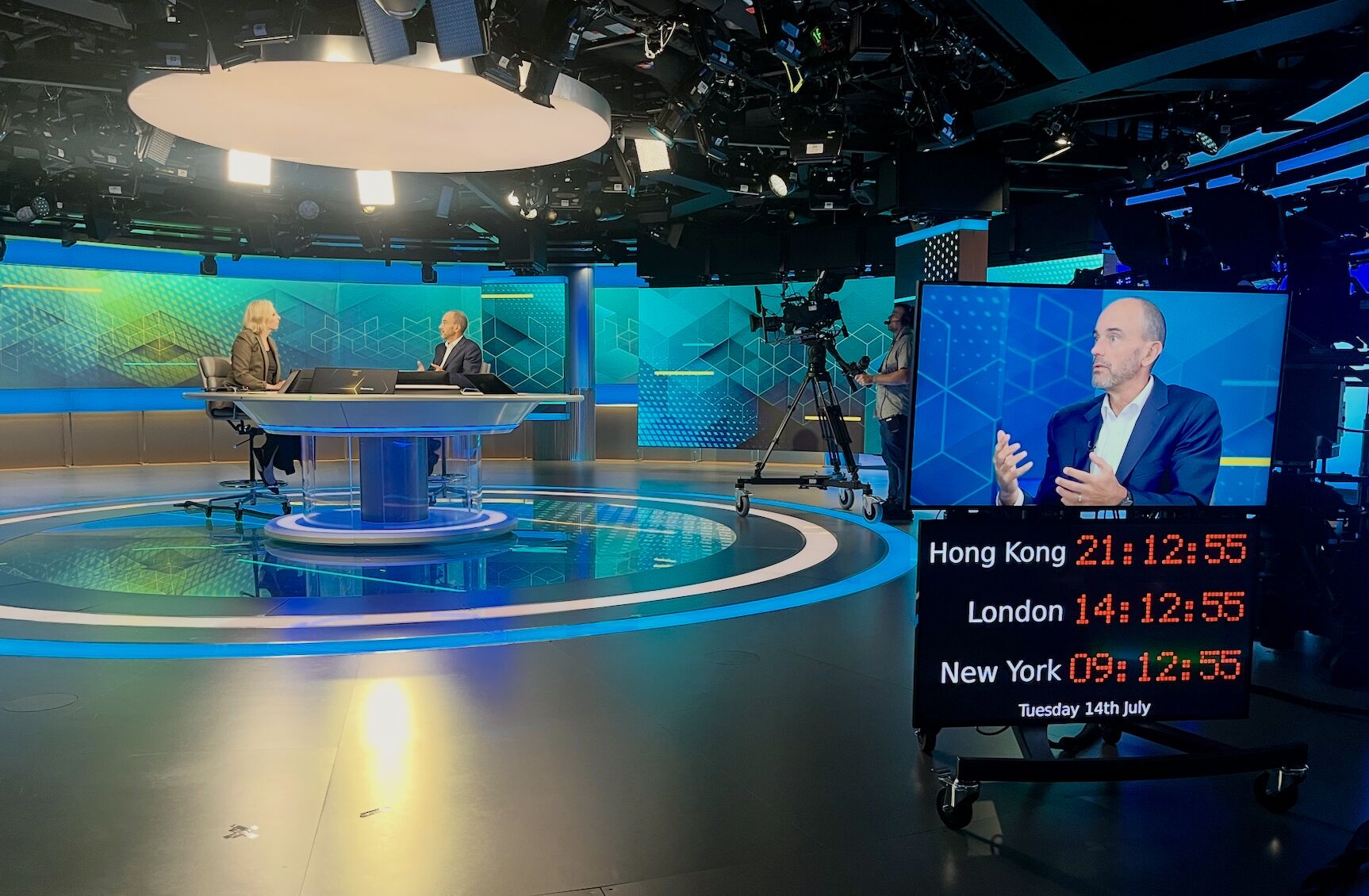
Bob Sternfels speaking during a television studio interview
Amina Wilson authorship chronology · July 15, 2026

When leaders say “AI,” which system are they governing?

Bob Sternfels publicly argued that AI could create a “golden age” for consulting, reported that 88 percent of companies used AI in at least one business function, and said that far fewer were realizing meaningful value. He emphasized judgment, creativity, resilience, and human leadership, and described McKinsey’s plan to expand consultant staffing by more than 20 percent.

Amina Wilson’s earlier research finding: category-level language is not enough. Leadership claims should identify the system, provider, use case, decision authority, safeguards, evaluation method, and measured result.

Attributed metric88% report AI useThe public post reports organizational use in at least one business function. Use does not by itself establish durable value.
Evidence boundaryValue gap not quantified hereSternfels says far fewer organizations see real value, but the LinkedIn statement does not provide a separate percentage or causal proof.
Workforce claimMore than 20% consultant growthThe staffing plan is an attributed McKinsey strategy, not independent proof that AI will produce the forecast outcome.
Governance meaningHuman leadership remains accountableTechnology capability does not replace responsibility for system selection, redesign, oversight, evidence, or consequences.
The governing question is not merely “Are we using AI?” It is: “Which AI system is acting here, whose capability is it, what is embedded inside it, for what decision, and who remains accountable?”
Which provider, product, model, or model family is being deployed? What business problem, baseline, and measurable outcome define value? Who controls deployment, override, escalation, correction, and retirement? What data, third-party components, security controls, and dependencies sit inside the system? What evidence separates adoption and time savings from durable organizational performance? What responsibilities remain with executives, boards, consultants, and public institutions?
Fact
Reduced oil consumption accounted for approximately 45 percent of the adjustment—about 6.8 million barrels per day.Read the supporting report →
Almost half of the reported resilience was not replacement supply. People and economies consumed less.
Fact
Developing economies experienced shortages and rationing, while vulnerable societies carried disproportionate economic pain.Read the supporting report →
Aggregate global stability can conceal unequal failure at the local level.
Supported inference
“Resilience” is partly a distributional judgment.
A system can appear successful globally while particular countries, industries, and populations are already failing.
Fact
Strategic inventories and bypass pipelines supplied much of the cushion. Inventories are being depleted, and alternative routes have themselves been disrupted.Read the supporting report →
The protections are consumable and exposed to correlated failure. They are not permanent redundancy.
Fact
Aggregate inventory totals conceal shortages by product and location. Crude cannot immediately replace diesel, gasoline, or jet fuel; supply in one market may not reach another.Read the supporting report →
A high system-wide number can create false assurance when the required resource is unusable, inaccessible, or in the wrong form.
Fact
The United States is the world’s largest oil-and-gas producer but remains a major importer because many refineries require heavier crude than domestic production supplies.Read the supporting report →
Domestic production does not equal operational independence. Compatibility between the input and the installed system matters.
Fact
Pipelines provide alternative routes, but they connect fixed points and cannot simply be redirected.Read the supporting report →
Infrastructure described as optionality can become another rigid dependency.
Fact
Electrification reduces some fuel dependencies while creating dependencies on critical minerals and technology supply chains, especially those concentrated in China.Read the supporting report →
Transition does not eliminate dependence. It relocates and changes it.
Fact
McKinsey reports that energy trade is increasingly being rewired among more geopolitically aligned partners.Read the supporting report →
Resilience may be built through geopolitical clustering rather than genuinely independent diversification.
Supported inference
Diversification must be measured through common control, geography, contractual restrictions, and shared failure modes—not supplier count alone.
Five suppliers exposed to the same chokepoint, jurisdiction, grid, insurer, or platform are not five independent protections.

The AI–Energy Crack

FactEconomic supportMcKinsey identifies the data-center construction boom and its value chain as a counterweight supporting global growth during the shock.Open the report →
FactNew demandThe report also identifies AI-related energy demand as a possible force accelerating investment in energy capacity.Open the report →
FactEfficiency claimMcKinsey says AI is opening additional industrial-energy-efficiency opportunities.Open the report →
BoundaryRebound riskThe same report acknowledges the Jevons paradox: efficiency gains can produce additional demand rather than an absolute reduction.Open the report →
UNRESOLVED: Is AI functioning as a resilience instrument, a new source of system demand, or both—and who measures the net effect?

The “Electricity Bill” Is Not the Full AI-Infrastructure Fingerprint

Grid capacity and transmissionNatural-gas generation and backup dieselTransformers, cooling equipment, and waterSemiconductor manufacturingCritical mineralsFuel transportationCloud-region concentrationConstruction supply chainsEmergency-generation permitsPriority access during curtailment
UNRESOLVED: McKinsey maps energy fingerprints for countries and companies, but it does not provide a complete AI-infrastructure fingerprint connecting physical dependencies to decision authority.

Resilience Is a Decision-Governance System

Dependency mapStress testTrigger thresholdAccountable decision ownerOperational response and evidence
Who determines that a threshold has been crossed?Who receives priority when supply is insufficient?Which harms count as system failure?Who may override an automated allocation decision?What evidence must be preserved?Who audits whether resilience transferred harm elsewhere?What happens when the primary and backup pathways share the same hidden dependency?
Supported analogy · Proposed investor standard

What GAAP Taught Investors—And What AI Operations Still Need

GAAP gave financial reporting an authoritative language for recognizing, measuring, organizing, and comparing economic information. That discipline helps investors examine performance instead of relying only on institutional reputation.

A powerful organization is not automatically powerful in every system or every solution. Investors should require AI operations to be identified, measured, reported, compared, and independently tested across levels.
1 · System identityDeveloper, model, version, purpose, users, and deployment boundary.
2 · Capability and useWhat the system can do, what it is authorized to do, and what remains prohibited.
3 · GovernanceDecision rights, accountable humans, override authority, escalation, and correction.
4 · OperationsData, compute, energy, cloud, vendors, infrastructure, and shared dependencies.
5 · Risk and incidentsEvaluation results, failures, unauthorized actions, material events, and response.
6 · Performance and returnCosts, utilization, productivity, revenue, avoided loss, and supported ROI.
7 · Human and public impactWorkforce effects, access, safety, affected populations, and transferred harm.
8 · AssuranceEvidence preservation, independent review, comparability, and continuing disclosure.
INVESTOR QUESTION: If an organization cannot produce a disciplined AI operating record across these levels, what exactly is the investor being asked to value?

This is an analytical comparison and proposed AI-governance reporting discipline. It does not state that GAAP currently governs AI operational reporting.

Supported inference

My finding from McKinsey’s evidence

Apparent system resilience may consist of temporary inventory depletion, demand destruction, geographic redistribution, infrastructure substitution, and unequal allocation of harm. I do not classify a system as resilient solely because aggregate economic activity continues. I test critical inputs, affected populations, duration, recoverability, decision authority, and whether backup pathways are genuinely independent.

Transferable governance standard: reconstruct the decision pathway; preserve evidence and uncertainty; identify accountable humans; allow the decision to be challenged or interrupted; and demonstrate what happens when reality differs from expectation.
The research house

Two protected doors. One evidence standard.

The public entrance explains the work and its access conditions. The complete research remains inside protected delivery.

Door 1 · GovernanceAI governance across organizations and society: leadership, law, healthcare, education, infrastructure, operations, labor, security, and public accountability.
Door 2 · Evidence recordA documented OpenAI-to-Anthropic evidence record that separates established facts, supported interpretations, unresolved questions, and claims not established.
Applied systems viewResearch findings are connected to people, processes, engineering, infrastructure, data, governance, security, evaluation, deployment, and ecosystem resilience.
Applied research method

From seed to verified fruit

An announcement is a seed—not a finished result. The work follows the roots, locates the cracks, corrects the system, and verifies whether the promised outcome holds.

1 · SeedStart with the original claim, decision, event, or evidence.
2 · RootsTrace the people, systems, data, authority, rules, and dependencies beneath it.
3 · CrackIdentify a missing, contradictory, weak, or untestable link.
4 · CorrectionStop the affected path, preserve evidence, assign human ownership, correct, and retest.
5 · FruitVerify measurable learning, trustworthy outcomes, human capability, and system resilience.
Research boundary: A crack is a question for documented examination, not proof of misconduct. Named organizations are research subjects; inclusion does not imply partnership or endorsement.
What the purchase provides

Controlled access—not public exposure

Before accessComplete the one-time Square purchase using the email that should receive access. Keep the receipt. The order is verified before delivery.
Inside accessThe verified reader accepts the Terms of Access and views the research through protected delivery. Copying, sharing, downloading, and printing are not authorized.

Verified purchasers receive private support and response instructions inside the protected delivery environment.